close
Choose Your Site
Global
Social Media
Views: 0 Author: Site Editor Publish Time: 2026-07-13 Origin: Site


Modern manufacturing demands reliable, high-volume production assets. You cannot view a modern flexo printing machine as just another mechanical tool. It acts as a critical engine for scaling your packaging, label, and corrugated manufacturing lines. Industry leaders have largely shifted away from manual legacy presses. They now rely on highly automated flexographic systems to meet soaring global demand. Digital printing certainly dominates short-run custom jobs today. However, flexography remains the undisputed standard for continuous, high-speed, and long-run production.
Buyers must transition from basic definitions to practical commercial realities. This guide helps technical buyers and operations managers accurately evaluate press capabilities and configuration types. You will learn how to align specific machine architectures with your production demands. We will explore core mechanics, substrate versatility, and key evaluation dimensions. This ensures you make a highly informed procurement decision without encountering unexpected operational bottlenecks.
Core Definition: A flexo printing machine uses flexible photopolymer plates and rotary anilox rollers to transfer fast-drying inks onto diverse substrates (film, foil, paper, board) at continuous high speeds.
Primary Advantage: Offers the lowest cost-per-unit for mid-to-long print runs, combined with the ability to integrate inline finishing (die-cutting, varnishing, slitting).
Configuration Matters: Selecting between Central Impression (CI), Inline, and Stack architectures dictates the substrates you can run and the markets you can serve.
Operational Reality: High ROI depends heavily on minimizing changeover times, managing tooling (plate) costs, and investing in operator training.
Table of Contents
Understanding the mechanical sequence establishes technical expertise. A flexo printing machine relies on a highly synchronized process. Every component directly impacts production reliability. When operations managers grasp these mechanics, they troubleshoot defects much faster.
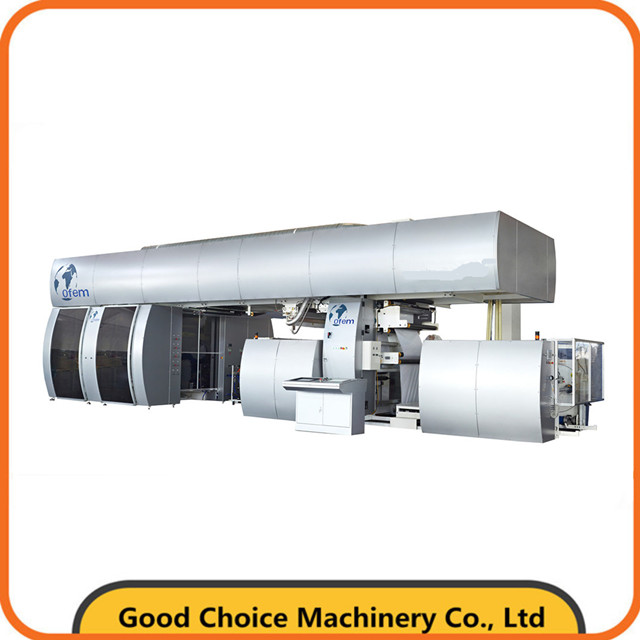
The ink delivery process dictates final print quality. It begins in the ink chamber. A pump supplies ink into an enclosed chambered doctor blade system. The doctor blade presses against the rotating anilox roller. It shears off excess ink, leaving fluid only inside the microscopic cells of the roller.
Anilox cell volume is critical. It dictates exact ink density and color consistency. If you choose a high cell volume, you get heavy coverage for solid blocks of color. Lower cell volumes deliver fine dots for intricate process printing. Operators must match the anilox specification to the specific job requirements.
Once the anilox roller holds the ink, it transfers it to the plate cylinder. This cylinder carries flexible photopolymer plates. These plates feature raised relief images. You must secure them using specialized double-sided mounting tape. The tape's density acts as a shock absorber.
Precise impression settings are mandatory. If the plate presses too hard against the substrate, you experience dot gain. Dot gain causes images to look blurry or overly dark. Modern servo-driven presses allow micro-adjustments to impression pressure. This precision prevents print degradation during high-speed runs.
Web tension control determines color registration accuracy. The substrate unrolls and travels through multiple color stations. Continuous roll-to-roll web tension keeps the material perfectly flat and aligned. You cannot afford tension drops.
A typical flexo printing machine runs at speeds exceeding 500 feet per minute. At these velocities, minor material stretching causes subsequent colors to misalign. Automated tension controllers continuously monitor and adjust roller speeds. They compensate for the shrinking diameter of the unwinding roll.
Flexo inks must dry before the web reaches the next color station. If they remain wet, the next plate will smear the previous color. You must utilize inter-station drying modules.
Hot Air Dryers: Essential for water-based and solvent-based inks. They evaporate the liquid carrier rapidly.
UV/LED Curing: Used for ultraviolet inks. High-intensity light instantly solidifies the ink through a photochemical reaction.
Chilled Rollers: Often placed immediately after heat dryers. They cool the substrate to prevent heat-induced shrinkage.
Your choice of drying technology impacts your energy consumption and overall production speed.
You cannot use one press for every application. Press architecture dictates your substrate compatibility. It also defines your target output. Selecting the correct configuration ensures long-term operational success.

Flexo Press Architecture Comparison
Architecture Type | Best Suited For | Key Advantage |
|---|---|---|
Inline Press | Labels, folding cartons, tags | High modularity and inline converting |
Central Impression (CI) | Flexible packaging, thin films | Unmatched registration on stretchy materials |
Stack Type Press | Corrugated board, heavy sacks | Two-sided printing in a single pass |
Best for: Pressure-sensitive labels, folding cartons, and narrow-to-mid web applications.
Evaluation note: Individual color stations are arranged in a horizontal line. This layout makes the press highly modular. Operators can access each deck easily. You can integrate inline die-cutting, cold foiling, and laminating without disrupting the workflow. Inline presses transform blank rolls into fully finished, die-cut products in one continuous pass. They dominate the narrow web label industry.
Best for: Flexible packaging, unsupported films, and wide-web materials.
Evaluation note: All color stations surround a single large impression cylinder. The substrate locks onto this massive drum. It remains fully supported as it rotates past each print deck. This provides unmatched tension control. Registration accuracy remains flawless even on stretchy or ultra-thin substrates. CI presses represent the gold standard for printing food wrappers, shrink sleeves, and polyethylene bags.
Best for: Corrugated board, heavy paper sacks, and niche industrial applications.
Evaluation note: Color stations are stacked vertically. This configuration requires a larger vertical footprint but saves horizontal floor space. The web path travels up or down through the stations. Stack presses easily allow for printing on both sides of the web in a single pass. You can reverse the web direction between decks. They handle heavy, rigid, or thick materials that cannot wrap around a central drum.
Procurement teams need a strict, evidence-based decision framework. You must know exactly when a flexo printing machine makes commercial sense. Comparing flexo against digital and offset reveals clear operational boundaries.
Volume dictates your breakeven point. Flexo incurs higher setup requirements. You must manufacture plates, mount them, and run make-ready waste to dial in registration. However, flexo features exponentially lower running expenses. Ink and energy usage scale highly efficiently.
Digital printing excels for short runs. Frame digital as the optimal solution for jobs under 5,000 meters. Digital requires zero plates and offers zero setup waste. Yet, digital inks remain expensive. For any job exceeding 10,000 meters, flexo wins decisively. The speed and low unit rate of flexo quickly absorb the initial setup time.
Offset printing delivers exceptional quality on flat paper. However, offset struggles with non-porous materials. Offset inks require absorption or complex offline coatings to dry on plastics.
Flexo demonstrates superior substrate versatility. You can print on polyethylene, metallic foils, shrink films, and rough corrugated boards. Flexo utilizes fast-drying liquid inks. These inks adhere firmly to diverse surfaces. If your client mix includes flexible packaging or synthetic labels, flexo easily outperforms offset.
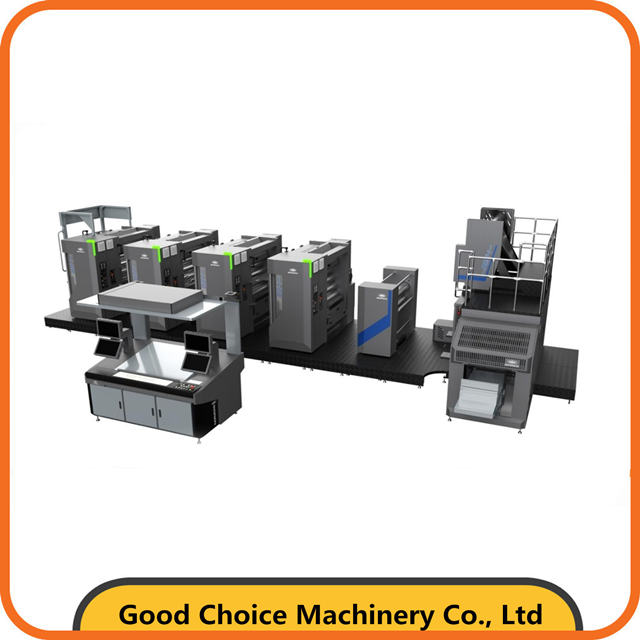
You must evaluate the return on "single-pass" manufacturing. Traditional offset often requires offline converting. You print the sheets, move them to a drying rack, and transport them to a separate die-cutting machine. This fragmented process demands more labor and floor space.
A configured inline flexo printing machine takes raw material to a finished product continuously. It prints, varnishes, die-cuts, and strips waste simultaneously. This continuous operation drastically reduces work-in-progress inventory. It enables faster delivery times and higher overall throughput.
Authoritative buying criteria separate entry-level machines from enterprise-grade production assets. You must evaluate features that guarantee long-term scalability. Do not purchase based solely on initial capital outlay.
Downtime between jobs represents flexo's traditional weakness. Modern presses mitigate this through aggressive automation. You should evaluate the following features:
Auto-registration: Camera systems automatically align colors during startup, reducing substrate waste.
Automated wash-up systems: Self-cleaning ink chambers drastically reduce manual labor between color changes.
Sleeve-based cylinder changing: Carbon fiber sleeves slide over air-mandrels. Operators change plate sleeves in seconds rather than hoisting heavy solid steel cylinders.
Faster changeovers directly increase your daily job capacity. They transform flexo into a more agile production method.
Assess web capacities based on current demand and five-year growth forecasts.
Narrow-web presses (up to 20 inches) serve labels and small cartons.
Mid-web presses bridge the gap for pouches and shrink sleeves.
Wide-web presses handle industrial packaging and bulk film.
Look for modularity in your equipment. Can you add additional color stations later? Can you retrofit a cold foil unit? Expandable frames prevent premature machine obsolescence as your market offerings evolve.
Environmental regulations strictly govern food-safe packaging. Your equipment must support sustainable practices. Evaluate the machine’s compatibility with water-based inks. Solvent inks emit volatile organic compounds (VOCs) and require complex extraction systems.
Assess the integration of LED-UV curing systems. Traditional mercury UV lamps consume massive electricity and generate ozone. LED-UV technology cures inks instantly, uses a fraction of the power, and generates zero ozone. Compliance capabilities ensure your facility avoids future regulatory fines.
We must transparently discuss the hidden risks and operational hurdles of adoption. Purchasing the hardware represents just the first step. Successful implementation requires careful facility preparation and workflow management.
You must acknowledge industry realities. Flexo requires skilled operators. Operators must manage web tension, monitor ink viscosity, and tweak impression pressures. The industry currently faces a shortage of veteran pressmen.
Factor in extensive training time. Alternatively, you must compensate for less experienced staff by investing in highly automated press interfaces. Advanced machines feature job-memory recall. They save tension and registration settings from previous runs. This reduces the burden on the operator and ensures repeatable quality.
Flexo demands a robust supply chain for consumables. The process requires physical plates for every color of every new job. You must determine your plate sourcing strategy. Will you purchase plate-making equipment in-house, or will you outsource to a prepress trade shop?
Maintenance consumables also require strict management. Anilox rollers need regular deep cleaning to maintain accurate cell volumes. Ultrasonic cleaners or laser cleaning systems prevent dried ink from plugging the cells. Doctor blades wear down quickly and require frequent replacement to prevent ink streaks. You must establish strict preventive maintenance schedules.
Installing a flexo printing machine demands significant infrastructure readiness. You cannot place these machines in an uncontrolled environment.
Climate control proves crucial. Temperature and humidity fluctuations warp photopolymer plates. They also drastically alter the viscosity of water-based inks. You must install robust HVAC systems. Furthermore, if you run solvent inks, you must install explosion-proof ventilation and exhaust oxidizers. Finally, ensure your facility possesses heavy-duty power supplies, especially if running multiple UV curing stations simultaneously.
Investing in a flexo printing machine acts as a major infrastructure decision. You trade upfront setup complexity for unmatched long-run profitability and continuous speed. Flexography remains the powerhouse of the global packaging industry. It handles diverse substrates efficiently and allows for single-pass manufacturing.
To secure top-performing equipment and expert guidance throughout your manufacturing transition, partnering with a trusted machinery provider like GOOD CHOICE ensures you get high-quality configurations engineered for your specific production needs. Their team specializes in delivering robust, high-precision industrial solutions that streamline setup times and maximize long-term packaging line output.
Before requesting OEM demos, you should audit your current average run lengths. Analyze your substrate mix and identify your current finishing bottlenecks. Understanding your exact production data prevents you from over-specifying or under-equipping your facility.
Your next steps involve strict evidence gathering. Request print samples on your specific substrates from manufacturers. Calculate your precise digital-to-flexo crossover point based on your current order volumes. Finally, schedule an operational consultation to review facility readiness and operator training requirements.
A: Enterprise-grade flexo frames easily last 15 to 20 years or more. Their longevity depends entirely on regular maintenance. You must routinely service servo motors, calibrate tension controllers, and maintain anilox rollers. Well-maintained presses retain high resale value and operational accuracy for decades.
A: A digital hybrid press combines the best of both technologies. It integrates a digital inkjet engine for variable data and short-run colors. It pairs this with flexo stations for high-speed varnishing, spot colors, and inline die-cutting. This provides extreme flexibility in a single footprint.
A: Yes. Modern flexo reliably achieves high-resolution photographic prints. The introduction of High-definition (HD) flexo plates, flat-top dot technology, and advanced software screening allows presses to hit 175+ line screens. This capability closely rivals traditional offset quality.