close
Choose Your Site
Global
Social Media
Views: 0 Author: Site Editor Publish Time: 2026-08-24 Origin: Site


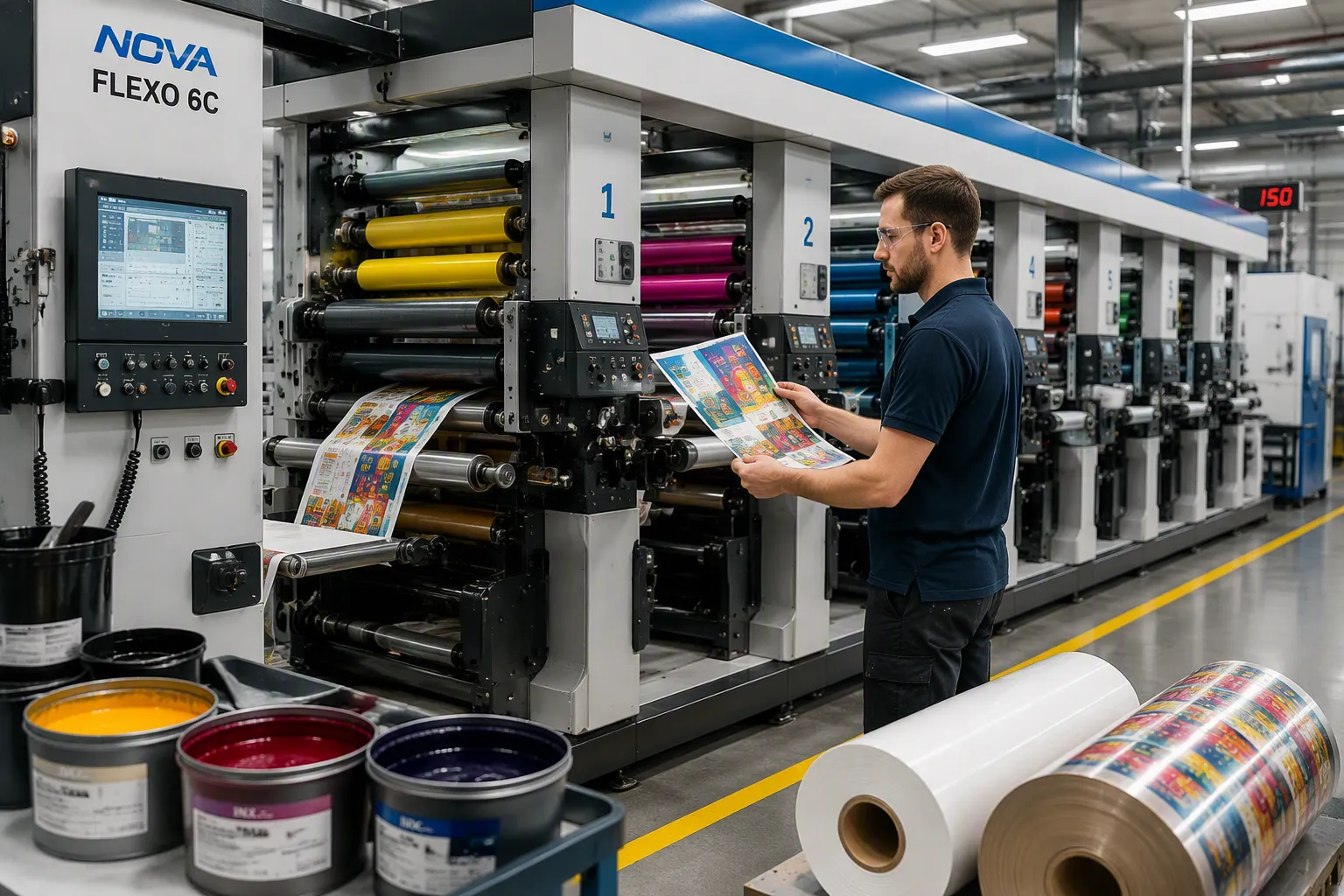
To choose the right flexographic printing press, you need a clear strategy—a wrong decision can cost you thousands in lost work and quality. This major purchase carries high risk; a poor match disrupts your entire workflow. Here’s a practical plan to evaluate your options.
Your choice depends on four key factors: production needs, budget, quality standards, and future growth. Each impacts the others. Speed without accuracy wastes materials, while quality that exceeds your requirements drives up costs. The flexographic printing press you select must balance these demands.
By the end of this guide, you’ll have a useful framework. You’ll assess flexographic printing equipment with confidence, understand how flexo technology fits your specific operations, and make a decision that boosts efficiency and growth.
Table of Contents
Choose a press that fits your exact production needs, like order sizes and the materials you use.
Understand the four main things: what you need to produce, your budget, your quality goals, and how you plan to grow later.
Pick anilox rolls with care to manage ink and get the print quality you want.
Balance speed with quality. Faster isn't always better if it creates more waste.
Figure out the total cost of ownership, not just the purchase price.
Look for automation features that cut down setup time and waste.
Think about what's coming next, like hybrid tech and greener choices.
Choose a modular press that can expand as your business grows.
Flexographic printing uses flexible relief plates and fast-drying inks to transfer images onto a wide range of materials. This rotary process works on film, paper, foil, and corrugated board. The flexographic printing press itself is a versatile machine that handles many packaging types, from food wraps to shipping boxes. Understanding its core parts and configurations helps you choose the right equipment for your production needs.
Every flexo printing machine begins with an unwind unit that feeds the substrate from a roll. The material then passes through multiple print stations. Each station contains one color. Between stations, drying systems cure the ink before the next layer applies. Hot-air, infrared, or combination dryers handle different ink types. Water-based inks need more energy, while solvent-based inks dry faster. The drying capacity often limits the press speed. A press that runs at 200 meters per minute may slow to 120 meters per minute if the dryer cannot keep up.
Anilox rolls are the heart of ink metering. These engraved cylinders carry a precise volume of ink from the fountain to the plate. The line screen, measured in lines per inch (LPI), determines the ink film thickness. Heavy solids require 150–250 LPI with higher volume. Fine text and small details work best at 300–400 LPI. Process halftones need 500 LPI or more. Matching the anilox to your artwork is critical. The wrong choice leads to starved prints with too little ink or flooded, blurry prints with too much.
After printing and drying, the outfeed section pulls the material through tension controls. A rewind unit collects the finished product into a roll. Proper tension prevents stretching or wrinkling, especially on thin films. The components of a flexographic printing press work together to maintain consistent quality from unwind to rewind.
A central impression press uses a single large drum to hold the substrate while multiple print stations surround it. This design provides excellent registration because the material stays against one drum. CI presses dominate the market with 46.68% share in 2024. They suit long, high-volume runs for flexible packaging. The wide web flexo press in this configuration handles speeds of 400–600 meters per minute.
Inline presses arrange print stations in a straight line. This modular design allows coating, die-cutting, and lamination in one pass. Inline presses grow at a 1.5% CAGR through 2030, driven by demand for short-run labels and customized packaging. Stack presses stack print units vertically. They offer lower capital investment and simpler maintenance. These configurations gain traction in emerging markets due to affordability.
Hybrid systems combine flexo with digital inkjet for variable data printing. Sleeve-based presses use replaceable sleeves instead of solid cylinders. This reduces changeover time and costs. Both options improve flexibility for mixed orders.
Servo-driven presses use electronic motors controlled by software. They eliminate mechanical gears, allowing variable repeat lengths without hardware changes. Servo-driven automation reduces setup time by up to 50% and setup waste by 40%. One servo press can replace two mechanical presses in productivity. Gear-driven systems are simpler but less flexible. They require manual gear changes for different repeat lengths.
Automated registration systems use cameras and sensors to maintain exact print position. They reduce misprints and waste. Job memory recalls pressure settings for recurring jobs, cutting changeover time from hours to minutes. The flexographic printing market reached $795.45 million in 2023 and is projected to grow to $1,317.09 million by 2032 at a 7% CAGR. This growth reflects adoption of automation that improves quality and efficiency.
Picking the right flexographic printing press means looking closely at several technical details. Each one affects your print quality, costs, and how well your production runs. You should check all these areas carefully instead of just looking at one impressive feature.
Print quality decides if your finished products meet what customers expect. The flexographic printing process depends on exact ink transfer, and two parts control this accuracy: the anilox roll and the printing plate.
The anilox roll measures the exact ink amount delivered to the plate. Its line screen, measured in lines per inch (lpi), and its volume, measured in billion cubic microns (BCM), work together to control ink film thickness. You must match these specs to what your artwork needs.
For heavy line work and solid areas, pick an anilox roll with a line screen of 150–250 lpi and higher volume. For fine text and small type, choose 300–400 lpi. Vignettes and gradient effects need finer screens. Process color halftones require the finest engraving: 500 lpi or more.
You also need to think about how the plate screen and anilox screen relate. A proper ratio helps avoid dot gain.
Your printing plate carries the image and moves it to the substrate. Plate hardness directly affects dot gain. Softer plates crush under impression pressure, causing fine details to blur and warp. Harder plates keep sharp edges and protect fine line work. Digital flexo plates offer better dimensional stability because laser imaging creates precise, repeatable dot structures.
Mounting accuracy matters just as much. Each plate must sit exactly where it belongs on the cylinder. If the plate stretches, shrinks, or distorts under tension, heat, or pressure, you will see misalignment between colors. This creates shadows, color shifts, and misregistered graphics. Careful mounting steps, using quality mounting tape and exact alignment, prevent air pockets and ensure even ink coverage across the whole image area.
Speed translates directly into throughput, but faster operation brings new challenges. You must balance maximum linear speed against your substrate characteristics and quality needs.
Modern flexo printing machines reach impressive speeds. Entry-level models typically reach 5–50 meters per minute (16–164 feet per minute). Mid-range equipment runs up to 250 meters per minute (820 feet per minute). High-end systems operate at 450–600 meters per minute (1,476–1,968 feet per minute). The link to throughput is direct: higher speed limits allow more linear feet of substrate printed per minute, proportionally increasing output rates.
But speed without control creates waste. High-speed printing above 500 m/min requires advanced web tension control. Without it, low GSM papers suffer web breaks and dimensional instability. These problems cause registration errors and web wandering that lower print quality and stop production completely.
Your real production efficiency depends on more than maximum speed. Setup time between jobs and waste during changeovers eat up valuable hours. A flexo printing machine with automated registration systems cuts setup time significantly. Job memory functions recall pressure settings for recurring jobs, reducing changeover time from hours to minutes.
Think carefully about the trade-off between speed and quality. A press that runs at 200 meters per minute may slow to 120 meters per minute if the drying system cannot keep up with the ink load. Your production efficiency depends on the whole system working together, not just the drive motor.
The flexographic printing press you choose must handle the materials you print daily. Substrate compatibility affects every part of your operation, from ink selection to drying needs.
Different substrates behave differently under tension. Thin films stretch easily, requiring precise tension control to prevent distortion. Papers, especially low GSM grades, may break at high speeds without proper support. Foils and laminates have unique surface characteristics that affect ink adhesion.
Surface tension plays a key role in ink transfer. The elastomer's surface tension should be about 3 dynes higher than the ink and 3 lower than the substrate. This balance ensures proper ink wetting and transfer. You must also consider compliance concerns. FDA regulations may restrict material choices for food packaging or medical applications.
Web width determines the size of materials you can process. A wide web flexo press reduces material waste through industrial-grade roll compatibility, excelling in large-format applications. A narrower width focuses on agility for short-run jobs, cutting changeover time and improving efficiency for smaller orders.
Larger widths need more space and energy. Your choice of width directly balances production quality against operational costs. Consider your typical order sizes and substrate types. A press that handles your current workload with room for growth provides the best long-term value.
The factors to consider when choosing a flexographic press go beyond these technical specs. Your decision must align with your production volume, quality standards, and budget limits. Evaluate each factor against your specific needs to choose the right flexographic printing press for your operation.
Before you compare models or ask for quotes, you need a clear view of your own work. The right flexographic printing press must fit your order size, material types, and quality goals. A self-check of your current and future workloads shows which features matter most. This step stops you from paying too much for features you rarely use or choosing a machine that cannot handle your growth.
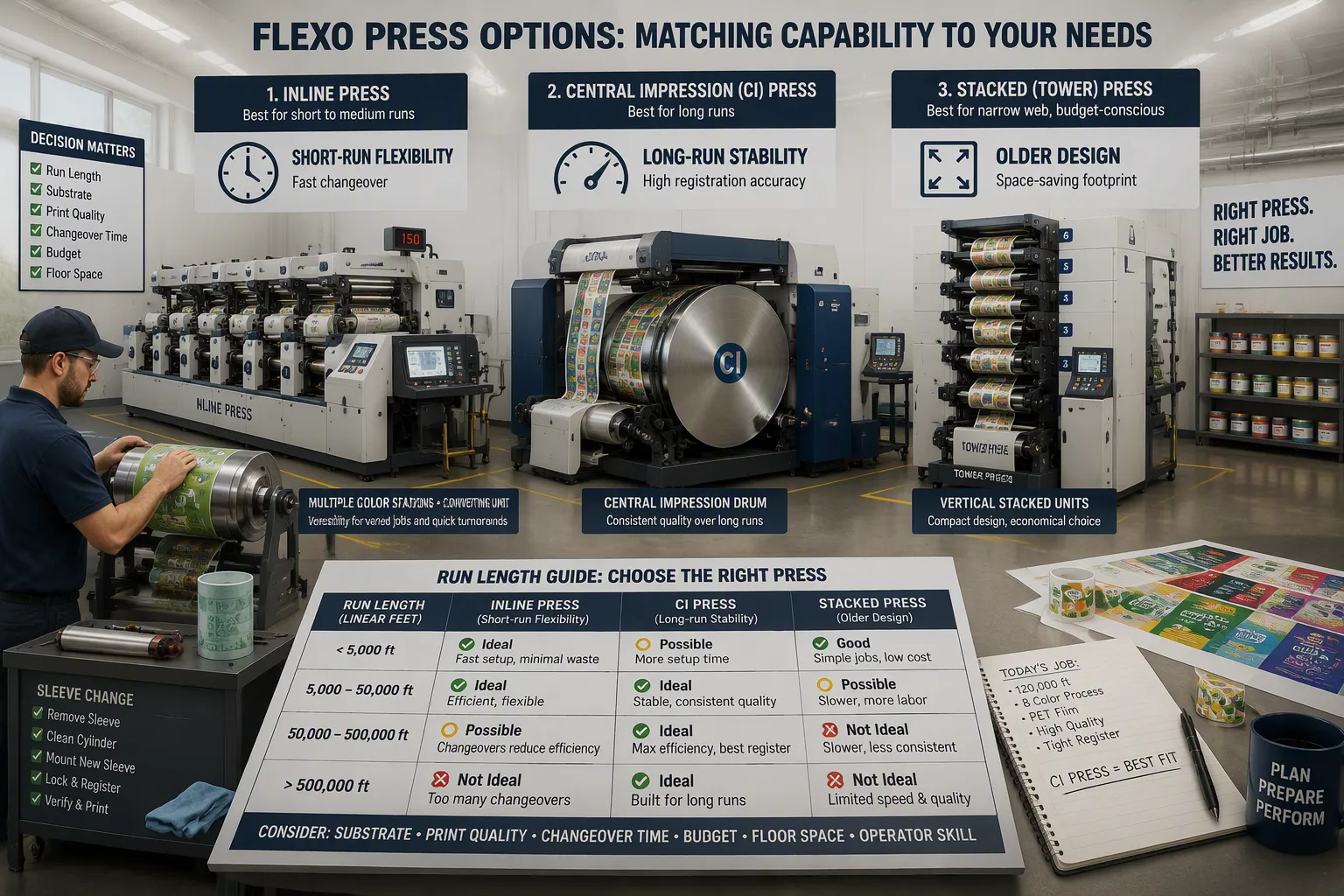
Your order patterns decide which press setup works best for you. Short-run jobs need fast changeovers and flexible setups. Long-run orders reward steady speed and stability. Most shops handle both types, so you need to know your mix.
The table below shows how different press types fit various production situations:
Press Type | Production Scenario Suitability | Key Influencing Factors for Selection |
|---|---|---|
Inline Press | Works well for both short-run and medium-to-long-run orders | Fast job changeovers; flexible process changes; modular design lets you set up print stations and converting units |
Best for long-run, high-quality color film labels | Great registration accuracy; stable handling of film materials; little material distortion; however, changeovers for different print repeats usually take longer than inline presses | |
Stacked/Tower Press | Older design; not made for either short or long runs | Takes up less space and costs less; but operating height grows a lot with more colors, which creates handling issues |
Short-run work needs a flexo printing machine that changes over fast. You lose money every minute the press sits idle between jobs. Automated registration, job memory, and sleeve-based plate mounting cut changeover time a lot. These features let you switch from one job to the next without manual tweaks.
Long-run stability matters when you print the same design for hours or days. A CI press shines here because its central drum holds the substrate firmly. This design keeps registration accuracy even at high speeds. The downside shows up during changeovers, which take longer than inline systems.
For most self-adhesive label printing and converting companies, picking an inline flexographic label printing press is a smart choice that balances market demand, investment cost, production flexibility, and overall efficiency. When you make your final choice, study your business model: Do you focus on short-run quick printing, or do you handle medium-to-long-run orders? How often do you change jobs?
Modern servo-driven presses help in both situations:
High Precision and High Speed: Fully servo-driven motors and digital registration systems allow high printing speeds with excellent registration accuracy, meeting high-definition needs for both short and long runs.
Flexible Structural Design: Stack or inline press setups let operators easily change plates, adjust color sequences, and add/remove process units, making it great for flexible production of many types and small batches (short-run scenarios).
Highly Integrated Inline Processing: One machine combines rotary die-cutting, foil stamping, lamination, varnishing, slitting, and digital coding inline, greatly shortening production cycles and boosting efficiency—a key plus for frequent job changeovers typical of short-run work.
The materials you print on control ink choice, drying needs, and tension control. Each substrate brings its own challenges. Your flexographic printing press must handle your main materials without constant fixes or quality problems.
Substrate | Challenge | Solution |
|---|---|---|
Nonporous surface needs strongly adhesive, fast-drying inks for stable color | Use solvent-based or UV-curable inks that bond well to plastic surfaces | |
Foils (aluminum, metallized PET) | Controlled ink thickness and accurate drying temperature needed to stop curling or distortion | Use UV-curable or solvent-based inks to keep brightness and stability during high-speed runs |
Paper | Ink absorption affects density and print quality | Pick the right paper type (e.g., coated paper for brightness) and pair with water-based inks for even absorption |
Corrugated Board | Dirt particles can clog anilox cells; ink absorbs into the board | Choose better paper quality, test inks for compatibility, and use proper anilox rolls to manage ink volume |
Film substrates stretch under tension. Your press needs exact web tension controls to stop distortion. Foils need careful drying temperatures to avoid curling. Paper absorbs ink differently based on its coating. Corrugated board brings dust that can clog anilox cells.
List your top three substrates by volume. Then check each candidate press against those materials. Ask the manufacturer for test runs using your actual substrates. A press that prints well on paper may struggle with thin films. The flexographic printing process works on all these materials, but each press setup handles them differently.
Your customers expect steady quality. Fine text, barcodes, and process color need specific press features. You must match your quality needs to the features that deliver them.
The anilox roll delivers a precise and steady volume of ink or coating to the printing plate. Every dot, every solid, every fine line depends on the volume and uniformity of that transfer. A high-performance anilox ensures: Predictable color densities, Crisp reproduction of fine details, Clean, controlled laydown of inks, adhesives, or coatings.
Fine text needs sharp plate edges and exact ink metering. Barcodes need clean, steady bar widths for reliable scanning. Process color needs accurate registration between stations and controlled dot gain.
Your anilox roll choice directly affects these results. Match the line screen to your artwork. Use finer engravings for halftones and process color. Use coarser rolls for heavy solids. Plate mounting accuracy also matters. A misaligned plate creates shadows and color shifts that ruin fine details.
Think about your quality certifications. If you serve food packaging or medical markets, you may face stricter standards. Your flexographic printing press must hold tolerances that meet those rules. Ask manufacturers about their registration accuracy and repeatability specs. Then check those claims with live demos using your own artwork.
The goal is to choose the right flexographic printing press that delivers the quality your customers demand without paying for features you never use. Match each press feature to a specific production need. This alignment ensures your investment pays off in both efficiency and customer satisfaction.
The price tag of a flexo printing machine catches your eye first. But smart buyers look past that number. The real cost goes well beyond your first payment. You must figure out the total cost of ownership to make a wise financial choice.
Your starting costs include more than just the machine. Installation covers electrical work, air supply, layout changes, and technician travel. Training your operators adds expense, especially when moving from old manual systems to automated ones. You also need tooling like plates, sleeves, anilox rollers, and doctor blades. Trial runs that waste substrate during start-up add to upfront costs. Connecting to converting lines may need extra investment.
Industry data shows the first cost of a flexo press usually makes up only a portion of its five-year total cost. The rest comes from ongoing expenses. The flexo process needs careful matching of anilox rolls to your artwork.
Running costs include supplies like inks, plates, and anilox rolls. Energy for drying and curing systems adds to monthly bills. Maintenance and spare parts need a local stocking plan. Labor and training continue for the life of the press. Downtime from changeovers hides costs like lost output and late shipments. Regular upkeep keeps quality steady.
A simple ROI formula helps you measure a new press's value. Use this: ROI equals net profit divided by total investment, times 100.
Step one: Add up your total investment. Include machine price, shipping, installation, training, first tooling, and floor changes.
Step two: Estimate yearly production revenue. Use realistic monthly jobs at a reasonable capacity. Multiply by the average job value.
Step three: Calculate yearly operating costs. Include ink, energy, labor, planned maintenance, and unplanned downtime.
Step four: Find net profit by taking operating costs away from revenue. Divide net profit by total investment and multiply by 100 for your ROI percent. A good payback period is achievable.
The table below shows the money pros and cons of each choice.
Option | Financial Advantages | Financial Risks |
|---|---|---|
Leasing | Lower start costs; steady monthly payments; easy to upgrade; tax perks | Higher total cost over time; no ownership; no resale value |
Buying | You own it; possibly lower long-term costs; can sell later | Big upfront cash; risk of becoming outdated; needs major initial money |
Pick an FMV lease if cash flow matters most. This gives you the lowest monthly cost. You can move to newer tech every three to five years. Choose to buy if you have cash ready and want to skip finance fees. Section 179 tax breaks may also make buying better.
Used presses cost less upfront but hide risks. Older machines may lack automation that cuts waste and changeover time. Service history matters. A well-cared-for used press can work well. A neglected one will cost more in fixes than you save on price. Always watch the press run and check service records before buying a flexo machine.
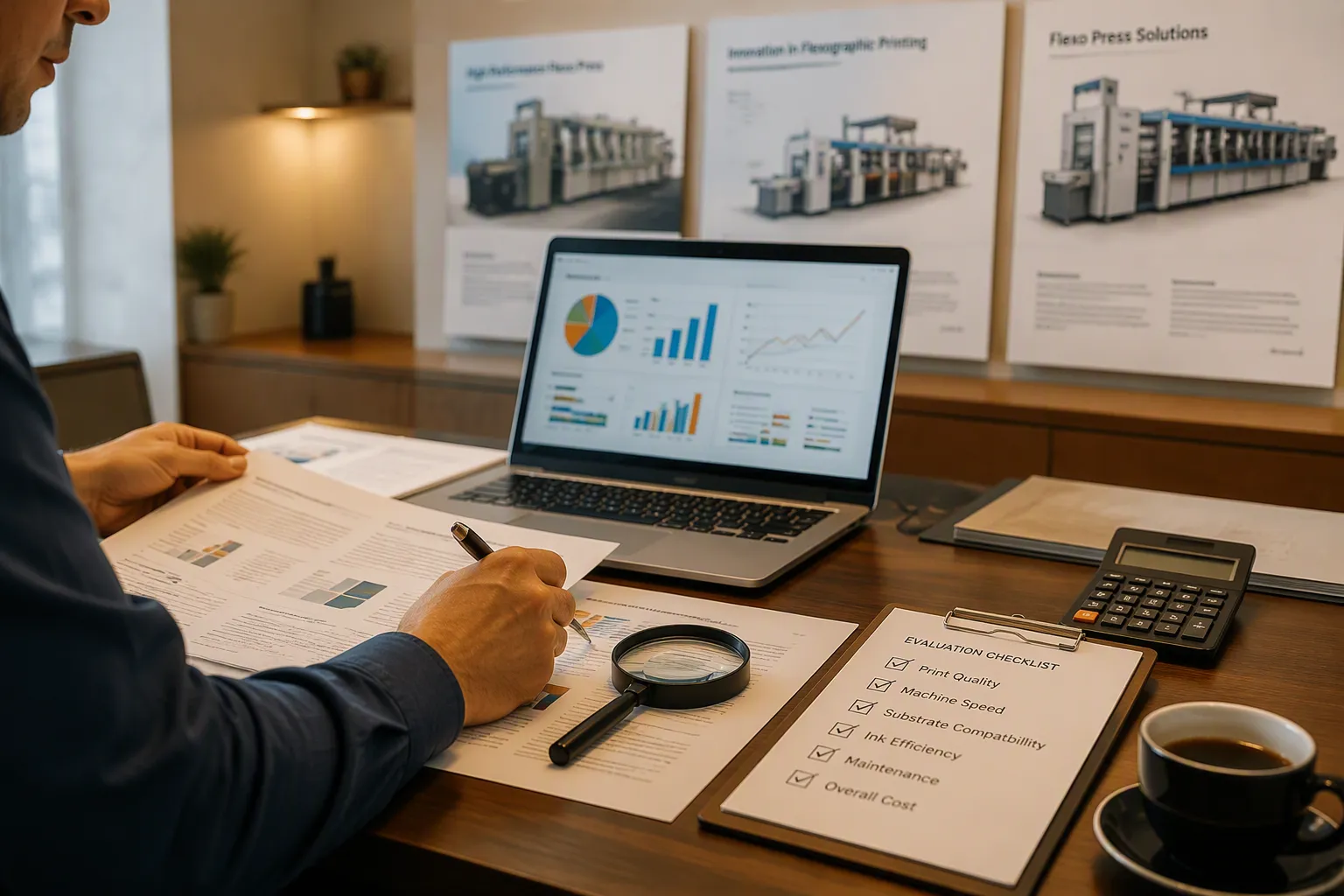
You now know the technical and money sides. The next step is using that knowledge. A clear plan keeps you on track and avoids costly errors. Follow these steps to pick the right flexographic printing press for your shop.
Your needs check forms the base for every choice ahead. This step needs honest review of your current setup and realistic guesses about future work. Skip this part, and you may buy a machine that does not fit your real needs.
Start by listing your current equipment. Write down every printing machine you own, including brand, model, age, and location. This list shows what you have and what gaps exist in your abilities.
Next, look at how you really use your equipment. Track wasteful habits and find slow spots in your workflow. Review monthly costs by collecting all bills for service, equipment, and supplies. This spending view shows where your money goes and where a new press could save.
Check your employee cost rates. Track time spent on managing equipment, ordering supplies, fixing problems, and handling invoices. These hidden labor costs often justify automation features on a new press.
Figure out your outsourcing costs. If you send work to other printers, ask why. Outsourcing often means gaps in your current equipment. A new flexo printing machine might bring that work back in-house and boost your profits.
Finally, list your current plant issues. Identify your daily problems and how a new press supplier could fix them. Share clear details about your product mix and challenges with possible suppliers. This honesty helps them set up the right press for your needs.
Work out technical specs, special uses, plant layout, and utility needs with the maker's engineering team. These details matter for setup and daily use.
With your needs written down, you can start comparing specific models. This phase needs careful attention to specs and hands-on checks. Do not trust marketing materials alone.
When comparing specs, look past basic speed and width numbers. Focus on precision tolerance, energy use, and the cost structure behind the quoted price. Registration accuracy matters more than top speed for most jobs.
Check the mechanical build of each press. Look for strong side frames, precise gearing with little backlash, and stable plate and impression cylinders. These parts ensure steady print quality and low upkeep over time.
Look at automation features. Check for automatic impression setting, motorized registration control, and remote diagnostics. These features cut waste and setup time a lot. Prefer presses with separate direct servo motors per unit, as they remove mechanical backlash and improve registration accuracy.
Think about rated speed versus sustained speed. Rated speed is a mechanical top under perfect conditions. Your real output depends on order length, changeover frequency, setup time, waste rates, substrate behavior, drying capacity, and operator skill. Ask makers for typical sustained speed for your specific substrate and weight.
Check web width and roll sizes. Parent roll width, diameter, and core size must match both the press and your upstream and downstream equipment. Color count matters too. A 2-color bread bag needs a simpler press than a 6-color retail shopping bag with process-color images.
Request a full Factory Acceptance Test (FAT). Run live production tests using your own files. Test automation features and measure Overall Equipment Effectiveness (OEE). Check mechanical stability under real working conditions. A good maker will welcome this review.
Ask these questions during your check:
What materials will you print (film, paper, label stock, foil, or layered structures)?
Do you need CI flexo, stack flexo, narrow web flexo, or another press type?
What printing width, number of colors, and production speed do you need?
Do you need inline drying, inspection, slitting, lamination, or other converting units?
Can the supplier support factory testing before shipping?
Does the maker understand your local market, operator level, and after-sales needs?
Is the machine right for your current product and future growth?
Can the supplier give practical technical talk instead of only sales quotes?
Compare specs from several makers, including GOOD CHOICE MACHINERY, to make a smart choice. Each maker brings different strengths, and your needs decide which matters most.
The press itself is only part of your investment. The maker behind it decides your long-term success. A good machine from a weak supplier creates problems you cannot fix alone.
Check certifications before you commit. Look for clear compliance papers that show the equipment meets world standards, such as a Machinery Directive Attestation of Conformity.
Check production references in tough markets. A global provider of commercial printing and packaging using a specific press series, reporting steady registration accuracy and better production efficiency, shows real-world reliability. Regional setups matter too. A well-known trademark design and printing company using a certain model, reporting top printing precision and full client approval, shows steady performance across different markets.
Call references directly. Contact current customers to check performance claims. Ask about uptime, maintenance costs, and the maker's speed in fixing problems. Trust but verify.
Check the service setup. A warranty for major parts, remote support, and 100% testing before delivery shows a maker confident in their product. Ask about spare parts delivery time and service response. A press that sits idle waiting for parts costs you money every day.
Check engineering depth through real intellectual property and research spending. Patents covering printing machine structures and remote control methods show internal engineering skill. An R&D team and yearly output show a maker committed to steady improvement.
Think about the total cost including shipping, freight, duties, taxes, and setup. Know exactly what is and is not in the quoted price. Lead time, payment terms, and contract rules also affect your choice.
Purchase price is only a portion of total cost of ownership over five years of use. A cheaper machine with higher upkeep costs, lower output, or shorter part life often costs more than higher-priced, better-quality options when figured across the equipment's life. Ask for detailed consumables costs, typical maintenance intervals, and output numbers to do a real total cost of ownership review.
Plan for a reasonable selection window. This time lets you check suppliers, visit facilities, and run trials on the equipment. Rushing this process leads to regret.
Understand the post-order process. Expect the order of engineering finalization, production, shipping, setup, startup, acceptance, and training. Plan for a reasonable timeline from research to bringing the press online. The long-term output gains come after that time investment.
Buy from trusted makers with strong warranties to ensure long-term reliability. Put quality over price, avoiding low-quality machines or unknown brands that may have function issues or voided warranties. The right flexographic printing press serves your business for decades, not just for the first year.
The flexographic printing industry keeps changing fast. New technology and green rules reshape what buyers want from their gear. You need a press that handles tomorrow's needs, not just today's orders. Knowing these trends helps you invest smarter.
Digital tech changes how flexographic presses work. Printers now mix traditional flexo with digital inkjet systems. These hybrid setups print variable data, like serial numbers, barcodes, or custom text, without stopping the press. You get flexo's speed for long runs and digital's flexibility for custom work.
Hybrid systems also handle shorter print runs. Demand for custom packaging grows every year. A flexo press with digital features runs these jobs well. You skip the cost of new plates for each small order. Instead, use digital for the changing parts and flexo for the steady background.
Key trends shaping the market include:
Expanded Gamut (ECG) printing for wider color range with fixed inks, giving better consistency and less waste
UV LED curing and high-efficiency hot air drying systems that make flexo printing greener
Digitalization and cloud-based production management tools (MIS/ERP) enabling real-time data collection
AI predictive modeling for production management, supporting goals from quoting to logistics
Practical automation features, such as automatic registration control, making machines easier to use
These developments boost efficiency and function across your whole operation. You track every job in real time. You predict maintenance needs before breakdowns happen. You adjust color settings automatically without manual work.
Variable data printing opens new revenue streams. You print unique codes, names, or images on each package. This serves industries like pharma, cosmetics, and food packaging. Rules often require batch numbers and expiration dates. A hybrid press prints these details inline, removing a separate labeling step.
Computer-to-plate (CtP) tech also speeds up order turnaround. You create plates digitally, cutting prepress time. Inline finishing options, like die-cutting and lamination, finish the job in one pass. Your customers get finished products faster, and you cut work-in-progress inventory.
Green pressure comes from customers, regulators, and consumers. Brands demand packaging that lowers environmental impact. Your flexo press must support these goals. Water-based inks and energy-saving drying systems lead this shift.
Water-based inks have fewer volatile organic compounds (VOCs) than solvent-based ones. They create safer work spaces and lower emissions. But water-based inks need more energy to dry because water has a higher heat of vaporization and boiling point than solvents like IPA.
Efficient drying systems make water-based inks workable. Infrared (IR) dryers offer a targeted fix. Water has near-IR absorption bands that allow targeted drying. Heat builds from inside the ink film rather than from surrounding air. This cuts energy loss from heating the substrate and press area.
On non-porous substrates like plastic films and foils, this targeted method speeds up evaporation. These substrates rely fully on evaporation, making dryer capacity the limit on press speed. A well-designed IR dryer helps you keep higher speeds while using water-based inks.
Energy costs also drop with advanced reflector tech. Directional lamps with built-in gold reflectors aim nearly 100% of infrared energy at the substrate. This saves energy costs compared to standard lamps. You cut operating costs while meeting green targets.
Interest in water-wash flexographic plates also grows. These plates develop with water instead of chemical solvents. They lower your environmental footprint and simplify waste disposal. Combined with water-based inks, they create a cleaner production process.
New substrates also appear due to green concerns. Easier-to-recycle mono-material polymer builds replace multi-layer laminates. Coated and barrier papers offer recyclable options to plastic films. Your flexo press must handle these materials without losing print quality.
Your business will change over time. Order volumes shift. Product lines expand. New tech appears. A press that cannot adapt becomes outdated fast. Modular designs protect your investment by allowing future additions.
Modular flexo presses let you add print stations, drying units, or converting modules later. You start with the setup you need today. When demand grows, you expand the press without replacing the whole machine. This spreads capital costs over time.
Consider a press with extra space between stations. This space fits future drying or inspection systems. Choose a press with a control system that supports software updates. New automation features arrive through upgrades, not hardware swaps.
Curing stations represent one new addition. Curing works well with mono-material flexible plastics. These materials support recycling efforts. A modular press accepts curing units when the tech matures and your customers demand it.
Ask manufacturers about upgrade paths before you buy. Some presses accept extra servo motors or print sleeves. Others need full replacement. The right flexo press offers a clear roadmap for growth. You invest in a machine that serves you for decades, adapting to market shifts and new chances.
The flexographic printing market keeps growing. Projections show steady expansion through 2032. Choosing a press with upgradeable features future-proofs your investment. You position your business to grab new chances while keeping the quality your customers expect.
The right flexographic printing press is not the most expensive or fastest model. It is the one that fits your unique business ecosystem. To choose the right flexographic printing press, revisit three pillars: a deep understanding of your production needs, a clear-eyed analysis of total cost of ownership, and a forward-looking perspective on technology. Use the outlined steps as your checklist. This structured method ensures you invest in equipment that delivers consistent quality and efficiency. A well-chosen press becomes a strategic asset. It drives growth for years. The flexographic printing process, when matched to your workflow, transforms your operations. Your flexo press should serve your business, not the other way around.
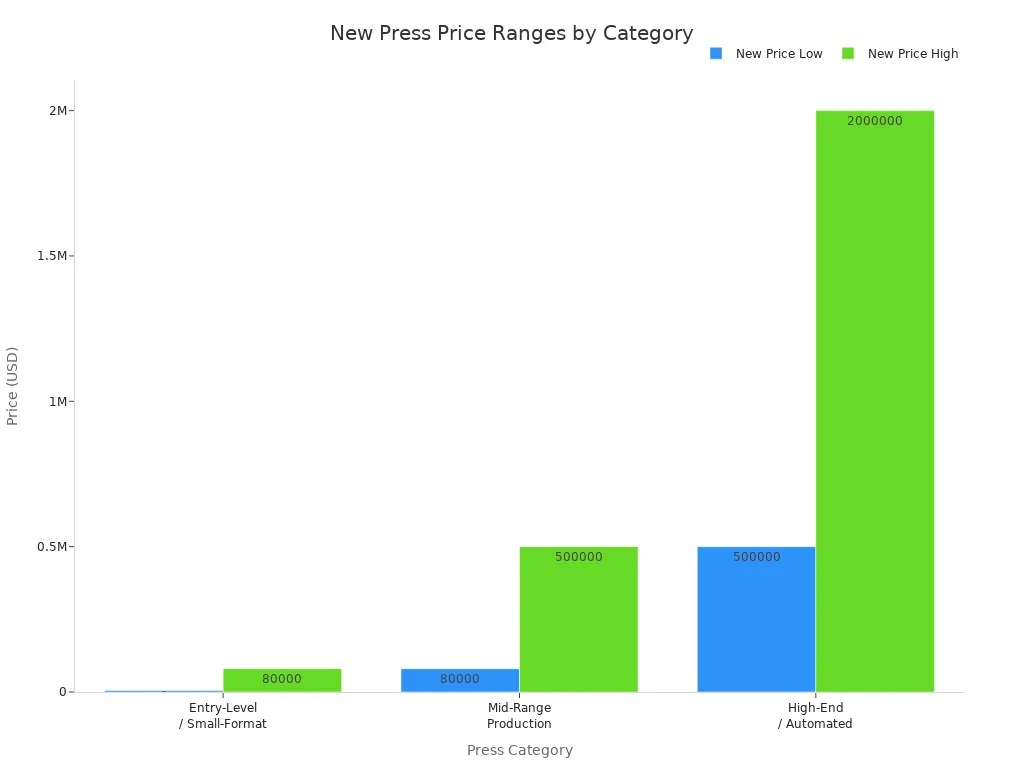
Entry-level models start around $5,000 to $80,000. Mid-range presses run $80,000 to $500,000. High-end systems exceed $2 million. Your total cost includes installation, training, tooling, and ongoing consumables. The purchase price represents only a portion of your five-year total cost.
A central impression press holds the substrate against one large drum. This design gives excellent registration for long runs. An inline press arranges print stations in a straight line. It allows faster changeovers and handles short-run jobs well. Your order mix determines which configuration fits better.
Match the anilox line screen to your artwork. Heavy solids need 150–250 lines per inch with higher volume. Fine text needs 300–400 lines per inch, and process color needs 500 lines per inch or more, with lower volume.
A used press costs less upfront. However, older machines may lack automation that reduces waste and changeover time. Check service records carefully. Watch the press run before buying. A neglected machine will cost more in repairs than you save on the purchase price.
Daily cleaning of anilox rolls and doctor blades prevents ink buildup. Regular checks on bearings and gears catch wear early. Regular calibration of registration systems keeps print accuracy steady. Regular replacement of consumables like plates and sleeves maintains consistent quality. Follow the manufacturer's schedule for best results.
Installation typically takes two to four weeks. This timeline includes electrical work, air supply connections, and floor preparation. Operator training adds another one to two weeks. Plan for a reasonable timeline from research to bringing the press online at full production capacity.
A flexographic printing press handles films, paper, foil, and corrugated board. Each material needs specific tension controls and ink types. Thin films stretch easily. Papers absorb ink differently based on coating. Foils need careful drying temperatures. Test your actual substrates before making a final decision.
Automated registration systems hold exact print position throughout the run. Job memory recalls pressure settings for recurring jobs. Servo-driven motors eliminate mechanical backlash. These features reduce misprints and waste significantly. Automation also cuts setup time by up to 50 percent, letting you produce more jobs with consistent quality.