close
Choose Your Site
Global
Social Media
Views: 0 Author: Site Editor Publish Time: 2026-07-29 Origin: Site


New flexo printing uses three main machine designs, representing the primary Flexo Press Types. These are central impression, inline, and stack. Each layout works with materials in its own way, creating different end results for your print jobs.
Think about how your material stretches first. Check your needed print alignment and machine speed. Always keep your budget limits in mind when evaluating different Flexo Press Types too.
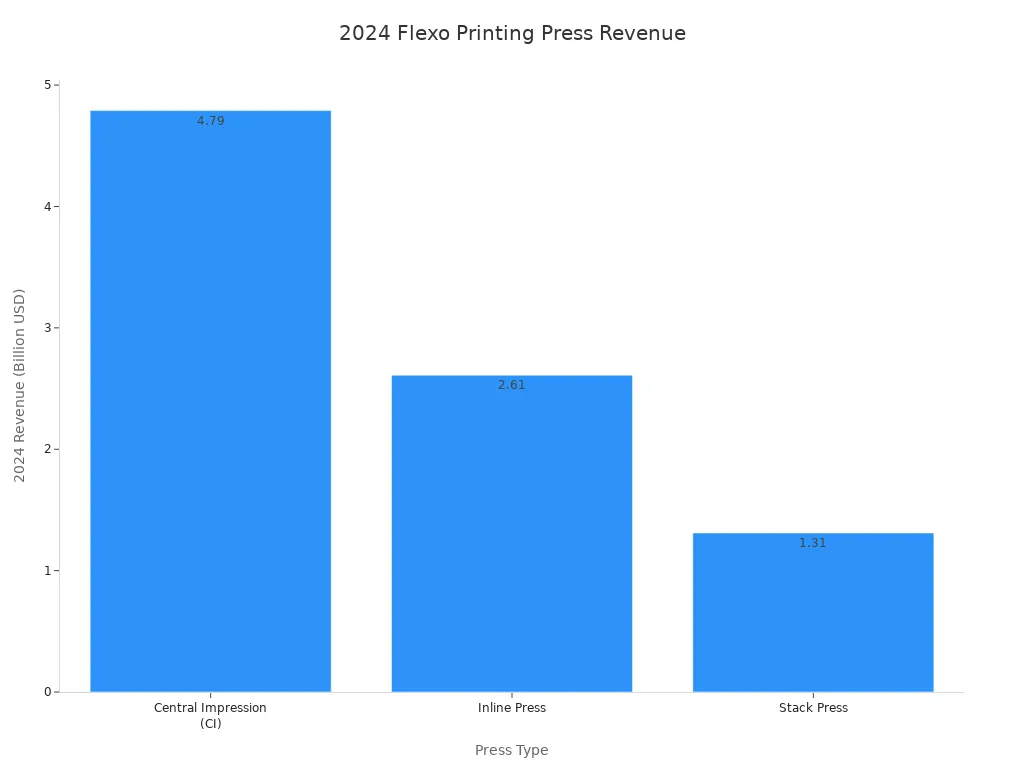
Picking the right model among these Flexo Press Types changes your plant output and impacts your final print quality in big jobs. Discover reliable, high-speed solutions for your facility with GOOD CHOICE MACHINERY.
Flexo printing machines use three main styles. These are CI, Inline, and Stack.
CI presses hold thin films on one big drum.
CI presses give the best colors. They run very fast.
Inline flexo machines line up stations across the floor. They print and cut easily in one pass.
Inline flexo machines work best for labels. They print heavy boxes well.
Stack flexo presses build upward. This saves floor space.
Stack flexo presses print both sides easily. They cost less money.
Choose the right machine for your job. This improves output and quality.
Table of Contents
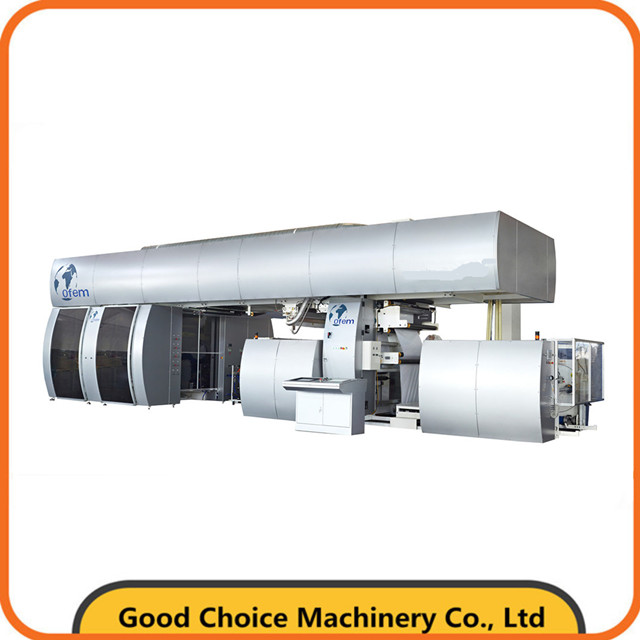
Flexo printing machines use different physical builds. You need to know these setups. This knowledge boosts factory output. Flexo machinery has three main types. These are Central Impression (CI), inline, and stack designs.
The machine layout controls web tension. It also guides ink transfer during printing.
A CI press uses one big central drum. Print stations circle this large drum.
Flexo Press Type | Mechanical Structural Configuration | Impression Roll / Cylinder Setup | Print Station Layout |
|---|---|---|---|
Central Impression (CI) | One main drum holds the material. Stations surround it. | One big central drum | It circles the main cylinder |
Vertical Stack | Separate print units stand upright | Individual separate impression rollers | They stack up in decks |
An inline flexo printing machine lines up units horizontally. Each unit works on its own roll. You can add extra tools directly. These include modular die-cutting, slitting, or lamination units.
A stack press stacks print stations vertically. This vertical stack layout saves floor space. You also get easy access to each deck.
Picking the right layout changes your product quality. It affects material choices too.
You can test flexography equipment with key metrics.
Metric | CI Press | Inline Press | Stack Press |
|---|---|---|---|
Register Accuracy | ±0.05 mm | ±0.15 mm | ±0.25 mm |
Standard Production Speed | 200 – 400 m/min | 100 – 300 m/min | 40 – 80 m/min |
Factory Footprint | Medium layout | Long horizontal | Smallest footprint |
CI presses lock material onto the main drum. This stops web stretch completely. It gives high register accuracy to ±0.05 mm. An inline press or stack press uses individual rollers. They offer loose tolerances from ±0.15 mm to ±0.25 mm.
Central impression units run very fast. They reach speeds between 200 and 400 m/min. An inline flexo printing machine runs well too. It hits flexible speeds from 100 to 300 m/min. Classic stack units run much slower. Their speeds stay between 40 and 80 m/min.
A stack press builds upward. It uses the smallest floor area. An inline press needs long floor space. CI units need medium floor space. They require high ceiling space too.
CI flexo press types print thin plastic film. They do not stretch elastic materials. Inline flexo machines handle heavy paperboard. They print multi-layer packaging products easily.
Pick the best machine setup carefully. Balance your equipment costs with daily production needs. GOOD CHOICE MACHINERY offers expert technical advice. We help you choose the best flexo presses. Improve your flexible packaging and printing operations today.
A central impression press gives high precision. It handles complex jobs well. This flexographic printing press uses one main drum. The drum supports your web continuously.
The strong frame guarantees great print quality. Every run stays consistent.
One single central drum secures your material. This lasts the entire run. This design stops substrate movement. It supports solid color consistency. You get tight registration accuracy. It helps high-precision print jobs.
Web Control & Material Protection: The central cylinder holds light films. It wraps them fully. This builds stable tension control. It stops material stretching. It avoids wrinkling.
Multi-Color Registration: The firm grip lowers color shift. It works across all stations. It ensures exact alignment. You get high-precision results.
New ci machines use direct drive technology. Hollow-shaft servo motors turn parts directly. They turn plate and anilox mandrels. They use no extra gears. This direct setup stops vibration. It stops gear backlash. The machine keeps steady dot placement. It runs fast above 400 m/min.
Mechanism | Technical Function | Impact on Register Stability |
|---|---|---|
Elimination of Mechanical Gears | Removes gearboxes and shafts. Removes mechanical linkages. | Stops gear backlash and wear. Reduces accumulated error over time. |
Direct Servo Drives & Encoders | Uses separate motors per roll. High-resolution encoders monitor them. | Tracks speed and position fast. Keeps color stations matched up. |
Synchronous Architecture & Web Control | Keeps a steady web path. Works across all stations. | Stops material stretching and drift. Prevents distortion while printing. |
Closed-Loop Registration | Uses fast sensors. Tracks print marks quickly. | Makes quick real-time adjustments. Holds dynamic accuracy to ±0.05 mm. |
Heat expands metal parts during operation. A modern ci press uses water cooling channels. They sit inside the main cylinder. This system holds steady thermal state. It works through daily runs.
Plants pick ci tools today. They upgrade manufacturing standards.
You keep perfect station alignment. The ci setup locks substrates down. Material sits on central steel. You avoid web movement. This helps the flexo printing process.
You print extensible films cleanly. You see no bad distortion. Flexible packaging plants choose ci flexo presses. They print thin polyethylene films easily. High web tension stays safe. It will not hurt substrates.
You get huge output volumes. These flexo presses hold web pathing. They run fast continuously. You complete high-volume jobs easily. You work with total confidence.
Check key machine features first. Then choose your flexo machinery.
The ci frame uses precise engineering. You spend more money upfront. Basic flexo designs cost less. Still, long-term output brings great value.
The main drum blocks ink decks. The design leaves small room. You cannot add converting modules. You add them to ci frames. You do die-cutting later. You do slitting on separate machines. This fits flexible packaging runs. It works for standard packaging.
CI tools perform well on tough jobs.
A modern ci drum holds fragile items well.
The drum frame stops film damage.
Converter teams use a ci press for stretchy materials.
Thin plastic films bend when tension shifts.
A main drum holds delicate films tight.
Polyethylene (PE) and Polypropylene (PP): Print clear art without stretch errors.
Polyester (PET): Print crisp graphics with stable colors.
Biaxially Oriented Films (BOPP & BOPET): Speed up output with good registration.
Thin films need good heat control.
A ci unit cools its main drum.
This stops film shrinkage under hot lamps.
The drum layout keeps film printing fast.
Food and medical packs need clean designs.
Follow safety rules and print fast.
A ci flexo setup solves printing issues.
Substrate / Application | Functional Packaging Needs | Key CI Performance Advantage |
|---|---|---|
Barrier Packaging Films | Multi-layer protection against oxygen and moisture | Accurate color placement across high-speed runs |
Medical Pouch Laminates | Sterile seals and heat-resistant outer layers | Uniform ink laydown with stable tension control |
Pouch and Retort Bags | Strong durability for cooking or freezing processes | Precise ink laydown without substrate distortion |
Apply safe water inks or beam coatings.
Clear stations create good barcodes and text.
Medical pouch teams trust strong ci units.
You deliver safe packs that gain trust.
An inline flexo printing machine puts units in rows. This setup helps you run hard jobs well.
The flat layout helps you reach every single station.
Inline stations stand in a line. An inline press prints colors one by one. You add extra tools to grow lines easily.
Servo motors power each inline flexo printing machine part. Drive setups drop gears. You keep exact color alignment across all printing stations.
Own tension controls guide all your paper safely. An inline flexo printing machine keeps material moving smoothly.
Feature Category | Structural & Operational Advantage | Performance Impact / Metric |
|---|---|---|
Architecture | Sequential unit arrangement & modular setup | Seamless inline expansion (lamination, die-cutting, foil stamping) |
Automation & Drive | Servo-driven systems & quick-change tooling | Eliminates mechanical memory; cuts setup time from hours to minutes |
Mechanical Design | Heavy-duty reinforced press construction | Maintains consistent pressure across varying substrate weights |
Production Speed | Single-pass integrated printing and inline converting | Cuts manufacturing time by up to 60%; processes 2,000–3,000 meters/hour |
Precision & Quality | Continuous material flow with vision inspection | Holds tight register accuracy (±0.12mm) with real-time defect detection |
Cost Efficiency | Reduced manual handling and single-pass workflow | Lowers operational labor (up to 50%) and waste (up to 30%) |
You gain fast speeds using all-in-one workflows.
An inline flexo printing machine prints and cuts fast:
Single-Pass Integration: It prints, cuts, slides, and rolls items on one line.
Workflow Efficiency: It lowers paper moves to speed up print work.
This setup turns your press into a full factory.
New inline flexo press builds speed up work. New press designs let you swap dies fast.
Operational Activity | Metrics / Duration |
|---|---|
Switching Job Variations | 5 minutes |
Full Job Changeover | 30 to 45 minutes |
Daily Job Changeovers Capacity | Approximately 30 changeovers (across 3 shifts) |
An inline press prints big thick cards easily. An inline flexo printing machine handles wide sheets quickly.
You meet market needs using a flexible press setup.
Printers pick an inline flexo printing machine for labels.
You make nice labels using a multi-tool press. A hybrid press blends digital tech with flexo tools.
An inline label press prints sticky labels quickly. You handle dynamic label print jobs with ease. Flexo tools print clear art on sticky labels.
You print thick boxes using an inline press. An inline flexo printing machine handles heavy board easily. You speed up box builds while printing labels.
A stack press gives clear options. You run unique jobs easily. Vertical decks boost work efficiency.
The strong frame sets vertical units apart.
A stack layout stacks stations vertically. Each deck works alone. This setup saves floor space. You reach all decks easily.
Each deck uses an impression cylinder. Adjust station pressure with ease. This setup lets you change paths. You keep the press frame intact.
The vertical build guides moving paper.
Functional Aspect | Impact of Vertical Deck Arrangement |
|---|---|
Web Path Management | It gives a short path. Low-tension brakes stabilize paper pressure. Semi-servo parts switch paths easily. Manage paper handling with care. |
Two-Sided Printing | Print both sides easily. Use split setups like 4+0. Do not change main parts. |
You gain good benefits with stack tools.
Easy paper paths print both sides fast. Set up 3+1 color tasks cleanly. Finish dual-sided jobs without extra tools.
Floor space affects your plant costs.
Footprint Benefit: Stack flexo presses save valuable space. They fit tight floors well.
Financial Benefit: They offer cheap entry points. Print simple jobs with low budgets.
A vertical stack flexographic printing press helps you print easily:
Works well for small print shops
Handles medium packaging runs
Fits tight budgets and cuts costs
Know machine limits to choose right.
Stack machines run slower than others. Web paths create small shifts. Avoid using soft plastic films here.
Shops use stack tools for bags. Heavy paper holds tension well. Get clean prints on rough stock.
Stack machines print soft napkins fast. Link presses with bag makers cleanly. Increase plant output every day.
Pick flexo press types by your substrate traits. Thin films need central support. Heavy paperboard fits an inline flexo printing machine. The inline flexo printing machine manages tension smoothly.
Plant output relies on fast changeover speed. An inline press swaps jobs fast. The inline flexo printing machine finishes jobs faster. Modern flexo presses cut daily downtime.
Complex jobs need flexible press setups. An inline flexo printing machine cuts and laminates. Use an inline flexo printing machine for labels. An inline flexo printing machine improves quality.
Buying a flexographic printing press takes planning. An inline flexo printing machine gives great value. Rely on an inline flexo printing machine. An inline press gives flexible options. GOOD CHOICE MACHINERY helps you compare flexo presses.
GOOD CHOICE MACHINERY ships flexo equipment worldwide. Pick an inline flexo printing machine from us. We sell official DH flexo printing machinery. Our equipment has CE and ISO9001 labels. We offer overseas training and fast support. Partner with us to grow your business.
Each press design gives your plant special benefits.
Learn these flexo press types to boost output. CI presses keep thin films aligned well. Inline machines handle many tasks with easy changes. Stack presses save space for basic two-sided jobs.
Pick equipment that fits your material and goals. Large printing jobs require smart plans. Contact GOOD CHOICE MACHINERY now for guidance and fast presses. Get expert help to improve your printing work today.
Choosing the right flexo printer helps your work speed. It improves colors and material fits. Read these easy answers to common questions.
A ci press holds thin films on one big drum. The drum keeps fragile film safe. It stops film slipping. This design stops film stretching at fast speeds. You keep exact print alignment. Colors stay true on stretchy films. Your factory makes top work without damaging thin plastic.
Pick an inline flexo printing machine for extra steps. Use it to die-cut or laminate in one pass. A stack press fits simple two-sided prints in small rooms. The inline flexo printing machine prints heavy paperboard fast. It handles tough jobs with ease.
Yes! An inline flexo printing machine prints labels very well. You can mix flexo stations, foil stamping, and slitting. Everything runs on one long line. You make top pressure-sensitive labels fast. You waste less paper. You raise daily output easily.
A hybrid machine joins digital tech with inline tools. You get fast custom text with high flexo speeds. This mix lets you print short custom label runs. You get bright, true colors. You meet tough customer needs with total choice.
Clean your inline press every single day. Check anilox rolls, doctor blades, and plate cylinders often. Oil drive parts to stop sudden machine damage. Keep web tension steady in every inline flexo printing machine. The inline flexo printing machine gives high quality on all runs.
Flexible packaging plants pick ci tools for delicate paper handling. The ci setup keeps web tension steady and smooth. You stop color shifts from heat or paper moves. So, a ci press prints clean multi-color art fast. It works great for food packs.
An inline flexo printing machine uses smart modular parts. It uses direct drive tech too. You swap plates and die cutters fast. Operators open individual inline press stations easily. An inline flexo printing machine cuts wait times between jobs. It raises your total output.
Pick a vertical stack press for tiny factory floors. The vertical stack layout saves a lot of space. You print both sides of rough paper in one run. This low-cost machine helps small shops on tight budgets. It gives good print results.