close
Choose Your Site
Global
Social Media
Views: 0 Author: Site Editor Publish Time: 2026-08-06 Origin: Site


Modern Paper Cup Manufacturing combines high-density virgin paperboard with polymer barrier coatings to form a strong leak-proof vessel. Automatic machines feed printed fan blanks into precision forming stations. High-temperature hot air or ultrasonic sealers bond the side seam tightly. Next, a punching mechanism feeds bottom paper stock into the forming cylinder. Rotating mechanical knurling wheels compress the interlocking bottom folds with heat and high pressure.
Metric | Data Value |
|---|---|
Global Production Volume (2026) | 264 billion units |
Hot Beverage Cups Volume Share (2026) | 67% (178 billion units) |
Dense wood fibers ensure structural integrity under compressive forces. Polyethylene coatings stop liquid absorption, while mechanical knurling seals prevent leaks.
Paper cup makers mix thick wood fibers with plastic layers. This helps build strong cups. These cups will not leak.
Plants pick thicker paperboard for big cups. This keeps the walls firm. It stops them from crushing.
Plant-based coatings like PLA help businesses. They offer green choices. They replace old plastic linings.
Smart machines quickly shape paper cups. They heat and seal side seams. Then, they fold bottom discs. This takes three fast steps.
Fast cameras check cup rims all the time. They spot bad parts fast. This stops leaks right away.
Testers use blue dye tests. They also check weights. This tests cup strength. It ensures good seal quality.
New factories use smart motor machines. They save energy. They also stop machines from breaking down.
Table of Contents
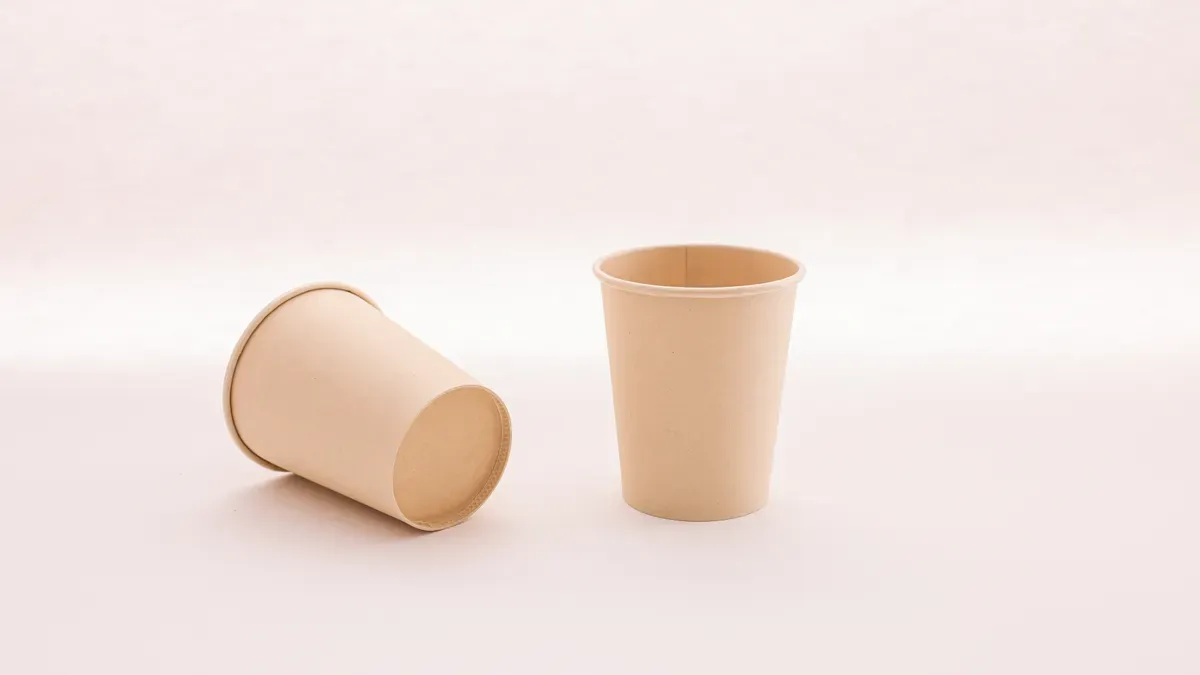
Pure paperboard builds a strong cup base. Makers mix long and short wood fibers. Long fibers add strength to stop tears. Short fibers make smooth paper for printing.
Grammage measures paper weight in GSM units. GSM shows fiber density and board stiffness. High GSM stops soft walls and leaks. Steady paper thickness helps side seams bond well.
Paperboard weight changes with cup size. Small cups need light paperboard. Big containers need heavier and denser paperboard.
Weight Category | Standard GSM Range | Applicable Cup Sizes |
|---|---|---|
Light Weight | 135–200 GSM | 4 oz to 9 oz |
Medium Weight | 210–280 GSM | 6 oz to 12 oz |
High Weight | 12 oz to 16 oz |
Hot drink cups use thick 280–340 GSM board. Cold drink cups use lighter 180–250 GSM board.
Polyethylene (PE) layers stop liquid leaks. Single PE coats only the inner wall. Cold cups need double PE inside and outside.
Polyethylene blocks water and oil very well. Yet, old PE coatings cannot decay naturally. Special tools spread liquid plastic on paper sheets.
Polylactic Acid (PLA) uses plants instead of plastic. PLA linings shield food containers quite well. PLA cups meet industrial compost rule EN 13432.
Water-based dispersion coatings offer green options. These coatings block water and oil easily. Factories can recycle dispersion paper without extra steps.
Plastic linings melt to join paper edges. High heat melts the inner coating layer. Strong machine jaws squeeze side seams tightly.
Ultrasonic waves seal bio-coatings like PLA fast. Good heat control stops bad leaks at speed.
Safety rules control food touch materials. FDA law 21 CFR 176.170 guides paperboard. Europe uses EU 1935/2004 and BfR XXXVI rules.
Paper cups generally maintain an exemption from premarket food additive clearance under the U.S. FDA Housewares Exemption.
Labs test chemical movement into fake liquid food. Tests show no bad chemicals enter user drinks.
Cups must never ruin drink flavors. High heat can free bad smells from paper. Factories use pure wood pulp for neutral taste.
Testing teams check cups using hot water. Testers grade smell and taste before sale approval. Pure raw materials keep drinks safe and fresh.
Printing turns raw paper rolls into branded parts. Workers pick good printing tools for top quality.
Machines print pictures onto paper sheets first. This order keeps pictures looking right later.
Flexo printing uses soft plates on cylinders. Machine wheels put quick-drying ink on paper.
Shops choose flexo for huge job orders. Fast spinning lowers costs and keeps colors true.
Offset presses move ink onto rubber pads. These soft pads print sharp art on paper.
Shops pick offset presses for fancy art. Fine details print without spreading outward.
Normal inks have bad chemicals. Workers must use safe water inks instead.
Special UV inks harden fast under lamps. Quick drying stops bad smells in storage.
Die-cutting cuts printed paper into cup shapes. Exact cuts help parts line up fast.
New cutting units feed paper rolls nonstop. Steel blades cut clean edges for seals.
Engineers design cup parts with exact curves. Proper shapes let flat paper roll well.
Exact sizes stop side seam breaks later. Good cutting tools keep exact sizes always.
Source / Context | Material / Application | Required Dimensional Tolerance |
|---|---|---|
Paperjoy Industrial Process | General fan-shaped cup blanks | Within ±0.5 mm |
Market Strategic Research Report | Precision platforms for thicker/composite-layer boards | Within ±0.1 mm |
Rotary cutters use round blades to slice paper. Spinning blades run fast to boost output.
Flatbed cutters stamp paper using flat dies. Strong presses crush thick boards with ease.
Dull blades make rough edges on paper. Smooth cuts help plastic coatings seal tight.
Auto vacuums pull paper waste away fast. Quick cleaning keeps trash off big machines.

Auto tools turn paper into strong cups fast. Three quick steps complete the whole build job. Modern Paper Cup Manufacturing uses fast parts. They make many tight cups every single minute.
Machine Category | Investment Range | Output Speed Capacity |
|---|---|---|
Mid-tier/Regional Forming Machines | $18,000 - $35,000 | 70 to 90 pieces per minute |
High-speed Intelligent Machines | $50,000 - $100,000+ | 120 to 150+ pieces per minute |
Vacuum arms lift paper blanks from piles. Fast arms load blanks onto cup forms. Smart eye sensors track blank positions continuously. They keep accurate speed with minimal errors always.
Open Cam Drives make 160 cups per minute. Big factories build over 5,000 cups hourly.
Air tools blow heat on paper edges. High heat softens inner plastic coatings fast. Heavy rollers squeeze hot paper edges together.
Melted plastic links into paper wall fibers. This hot seal stops leaks without glue.
Double PE coatings need quick sound waves. Fast sound vibrations shake joint plastic molecules.
This deep shaking makes fast local heat. The tool seals thin green coatings safely.
Small rolls feed narrow paper strips below. Smart motor drives pull paper strips evenly. Steady paper pulls prevent bad machine jams.
Sharp round dies cut small paper circles. Metal punches insert bottom discs inside cups.
yield = good units / total units x 100
Warmers heat lower edges of paper cones. Benders fold bottom edges around paper circles. This neat fold builds U-shaped seal channels.
Patterned wheels press folded bottom rims hard. Good setup lines wheel teeth up right.
Parameter Condition | Effect on Bottom Seam Integrity |
|---|---|
Insufficient Knurling Pressure | Prevents the liquefied PE plastic layer from fusing, leading to potential leaks. |
Excessive Pressure at High Heat | Causes the knurling tool to cut directly through the paper fibers, compromising structural integrity. |
Heat melts plastic while metal teeth pinch. The tool imprints textured rings inside seams. This step clamps fibers to close gaps.
Role of Heat: Melts and fuses the plastic PE layer where the bottom meets the sidewall.
Role of Mechanical Knurling: Curls, crimps, and presses the bottom edge to create a textured ring that forms a mechanical lock.
Clean food oil sprays top cup edges. Spinning heads bend soft top paper down. Smooth round rims give cups great strength.
QC teams measure paperboard water absorption before production. Techs perform TAPPI T 441 Cobb tests.
Inspectors weigh dry board pieces first. They add pure water to samples. Next, they blot surface water off. They reweigh samples to find total water absorption.
Workers test paper fiber strength using tensile tools. Strong fibers help cups resist high forces.
Stiffness tests check paper bending resistance. High stiffness keeps sidewalls from buckling under pressure.
Techs check paperboard moisture levels before feeding. Correct moisture keeps paper soft for folding.
High moisture creates bad wrinkles along seams. High dryness causes paper fiber cracking during curling.
New machines use fast digital cameras above stations. Cameras snap sharp pictures of finished rims.
Smart tools read visual images at full speed. Optical sensors spot tiny defects without slowing work.
Vision systems check top rim symmetry across units. Cameras flag egg shapes, cracks, and bad seams.
Sensors check bottom knurling patterns for unbonded folds. Real-time vision checks stop bad cups fast.
System controllers send reject signals to air nozzles. Strong air blows bad cups off fast chutes.
This auto step keeps bad cups away. Operators get fast alerts to adjust machines quickly.
Inspectors run leak tests using blue dye. Techs fill cup samples with blue liquid.
Dye enters tiny gaps along bottom channels. Inspectors check outer fibers for blue stains later.
Testing teams fill cups with hot liquids. High heat tests prove coatings resist boiling water.
Techs apply alcohol along inner seal lines. Fast alcohol reveals tiny coating cracks along seams.
Crush machines push down on upside-down cups. Testing tools track top strength before walls cave.
High strength stops cup damage during lid fitting. Firm walls allow safe stacking during shipping.
Fast tools can face sudden mechanical problems every day. Mechanics check important settings to fix bad cups quickly.
Smart checks help workers find line broken parts fast. Good control stops waste and keeps output quality high.
Changing heat makes weak paper board joints. Low heat leaves hard plastic layers unsoftened. Water leaks out through these open gaps later. High heat burns paper fibers and breaks barrier layers.
Bad line setups also break seam stability fast. Fast arms can place side edges completely wrong. Crooked paper edges leave tiny gaps along seam lines.
Techs set heater temp to match machine speed. Workers set precise heat zones for board thickness. Right heat melts plastic without burning raw wood fibers.
Sound sealers need exact tuning for double plastic. Tech crews adjust tool gaps and output pressure. Good sound waves form strong tight bonds always.
Too much water weakens soft paper fibers early. High air humidity swells blank edges unevenly. Clamps crush soft fibers and cause long wrinkles.
Wrong paper weight also causes bad structural damage. Thin paper board lacks good stiffness for tools. Heavy tools easily bend thin paper blanks wrong.
Teams store paper rolls in air controlled rooms. Auto systems check warehouse humidity all day long. Correct wetness keeps paper board stiff during folds.
Workers adjust mechanical clamps on forming cylinders. Setup steps match tool force to paper thickness. Correct tool gaps stop crushing to keep walls flat.
Dry paper edges create heavy friction inside tools. Unlubricated paper board stops smooth round bends. Friction causes tears and bad uneven top rims.
Old forming tools also ruin top rims over time. Metal parts get rough grooves from long work. Damaged dies press paper wrong to make oval rims.
Auto oilers spray food safe silicone before curling. Small oil sprays lower friction inside spinning heads. Smooth oiling helps top edges roll into round rims.
Tool teams check curling dies often for wear. Techs polish rough metal to smooth out channels. Quick die swaps keep lids fitting well always.
Forest groups prove safe wood pulp origins. FSC rules protect wild forest lands well. PEFC guidelines track safe tree cutting work.
Paper buyers track raw materials easily. Certified teams trace tree fibers to finished cups. Safe forestry stops bad illegal tree cutting.
Plant coatings must pass strict decay tests. European rule EN 13432 guides safe packaging. American rule ASTM D6400 tests factory composting.
Plant plant linings break down very safely. Clear bio-coatings decay fast in warm dirt. Good decay keeps local soil clean always.
Factory goals guide tool choices every time. Modern Paper Cup Manufacturing needs right speed setups. Normal tools make small quick job runs. Fast smart units make huge product runs.
Fast automatic paper cup machines use less power. Lower power use saves real plant money. Better green work cuts factory waste fast.
Engine setups change tool fix needs daily. Servo tools use smart computer power instead. Old cam tools use heavy steel parts.
System Component / Factor | Servo-Driven Systems | Mechanical Cam-Driven Systems |
|---|---|---|
Drive Mechanism | Replaces old parts with 9 servo motors. It uses PLC and ECAM tools. | Uses long shafts, gears, and chains. It needs heavy steel links. |
Maintenance & Repair | Smart parts are super easy to fix. Machine fail rates stay low. | Fixed parts need hard gear teardowns. Broken parts stop all work. |
Lubrication & Waste | Central oilers save oil and power. Smart care cuts fix trouble. | High friction wears heavy metal down. It lacks smart oiling tools. |
Plant leaders study all machinery costs first. Mold swaps help workers change sizes fast. Set care stops bad work line stops.
Cost Category | Key TCO Evaluation Factors |
|---|---|
Initial Capital Expenses | Tool cost, extra cup molds, and air pumps. |
Logistics & Setup | Shipping fees, taxes, wire setups, and tool starts. |
Operational & Production Expenses | Paper sheets, bottom paper rolls, and power use. |
Labor & Training | Operator needs, worker output, and staff training. |
Maintenance & Downtime | Extra parts, fix costs, and long machine life. |
Efficiency & Quality Controls | Fast speed, low paper waste, and long service. |
Making good paper cups needs great paper. Machines shape cups in three fast steps. Smart digital cameras check quality fast. Workers pick thick paper and PLA linings. Strong materials keep walls stiff and safe.
Buyers use this quick check list:
Check for valid FSC safety certificates.
Ensure cameras spot bad seams fast.
Test cup strength using blue liquid.
New cups use safe green water coatings. Smart cameras stop leaks and waste fast. Modern machine tools boost cup speed.
Bare paper board drinks up water fast. It then gets soft and weak. Plastic layers block all liquids. They stop leaky walls and seams. Heated plastic melts to seal seams. No outside glue is needed.
Techs use the Cobb test now. It measures paper liquid soak speed. First, they weigh dry paper samples. Next, they add clean water. Then, they blot and reweigh them. This step proves water stays out.
Cup size sets the paper weight. Small cups use light paper board. Medium cups need medium paper weight. Big hot cups use thick board. Thick paper keeps big cups strong.
Wrong heat and bad tools cause leaks. Low heat stops plastic from melting. Tool high pressure cuts paper fibers. Right heat and lined wheels fix leaks.
Hot air tools melt single plastic coats. Sound tools use quick sound waves. These waves shake plastic parts fast. Sound tools seal green coatings safely. Delicate layers do not burn up.
FDA rule 21 CFR 176.170 sets US rules. Europe uses EU and BfR rules. Most cups skip early FDA approval. The US Housewares Exemption allows this.
Smart motors replace old gears and chains. Electronic setups lower total machine breaks. They make fix work very simple. Built-in oil tools cut oil waste. Old gear setups need hard fixes.